Wedge welder CX600 unique value in oil field anti-seepage welding

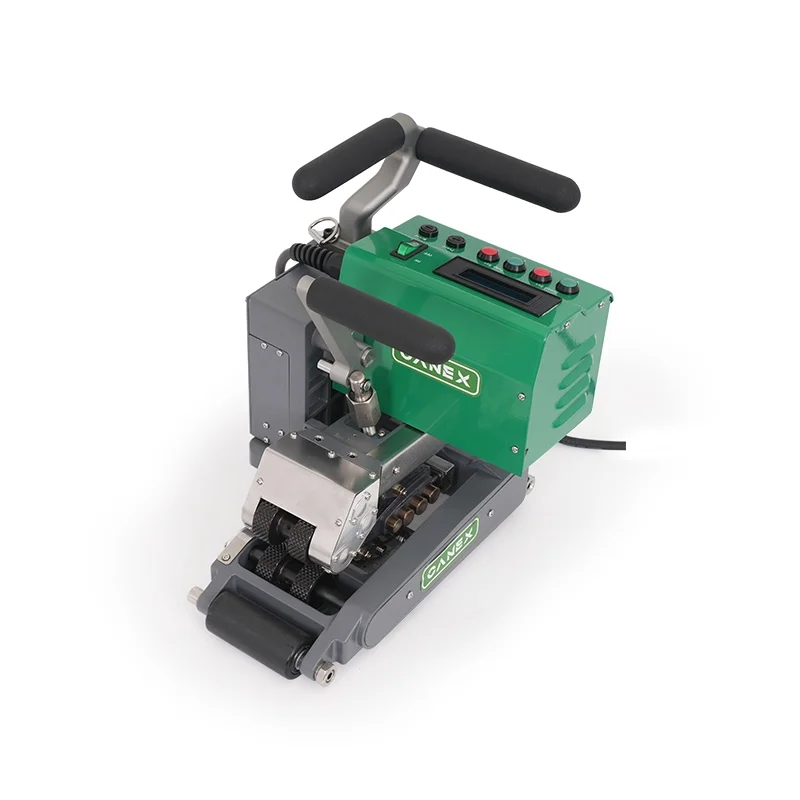
The CX600 wedge welder makes strong, exact seams for oil field anti-seepage geotextile work. That difference matters where chemicals, extreme temperatures, and strict rules punish any weak spot in the liner. One bad seam can weaken a whole containment system. So the choice of equipment really counts. The CX600 earns its place with controlled heat, steady travel, and welds that crews can check on site. Still, one fair question remains: what exactly makes this machine stand out, and where do other options fit better? The answer starts with the conditions the equipment must survive.
Key Takeaways
The CX600 wedge welder gives steady heat and speed control. This makes strong, repeatable seams in oil field containment.
Dual-track welds make a channel that can be air-tested, so checking the seam on site is fast and reliable.
The CX600 is made for tough oil field conditions. It has a strong build and moves on its own for even seams.
Pick the CX600 for oil field anti-seepage work; regular machines work well for mixed materials, and all-in-one systems fit nonwoven geotextiles.
Clean the surfaces, set the settings for each material, and take care of the machine every day. This keeps the seams even and ready for inspection.
Oil field anti-seepage welding requirements
Harsh conditions and compliance
Oil field sites put liner materials up against harsh chemicals. These include hydrocarbons, produced water, and treatment fluids. Over time, these substances can soften, swell, or break down a seam. Temperature changes add more stress. Hot days, cold nights, and hot process fluids all make the material expand and shrink. A seam must hold through every one of these cycles.
Regulators also require written proof of containment. Operators must show that the barrier meets strict environmental rules. Inspectors look at records as closely as they look at the liner itself. So compliance depends on welding that can be repeated, not on luck. A wedge welder that keeps steady settings helps crews meet these expectations shift after shift.
Seam quality and verification
The finished liner must form one continuous barrier that nothing can pass through. Any gap, thin spot, or cold joint becomes a path for leaks. Crews build long seams with double-track hot-wedge welds. They close patches and details with extrusion welds. Each method leaves a seam that inspectors can test.
Verification follows established methods:
Air-pressure testing of the channel between double-track seams, per ASTM D5820
Vacuum-box testing of extrusion welds, per ASTM D5641
Destructive samples cut and tested as the project specifies
The air channel matters most for long runs. Two parallel welds trap a narrow passage between them. A technician pressurizes that passage and watches for pressure loss. A stable reading confirms an unbroken seal along the full length. This test is fast, does not damage the liner, and can be repeated in the field.
CX600 wedge welder features for oil fields
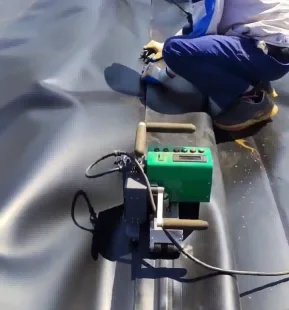
Temperature and speed control
The heated wedge is the main part of the CX600. A thermostat keeps the wedge temperature at the set value. This way, the material gets steady heat along the whole run. Operators can change that temperature to match the hot-melt material they use. Geotextiles and geomembranes differ in thickness and melt behavior. One fixed setting cannot work for all of them. The same idea applies to travel speed. Speed settings let crews slow down for thick sheet or speed up on long, straight runs. Field conditions change during the day, and the controls let the operator react without stopping the weld.
This control directly solves the oil field challenge. Chemical exposure and temperature swings hurt seams with weak or uneven fusion. A thermostatically controlled wedge keeps the heat steady. So the bond forms the same way from the first meter to the last. That consistency supports the repeatable results inspectors expect.
Pressure, durability, and dual-track welds
Pressure rollers push the heated material against the substrate as the machine moves. Operators adjust the roller pressure to fit the sheet and the site. Too little pressure leaves a weak bond; too much can thin the material. The CX600 moves along the overlap under its own power. This keeps the pace even and reduces operator fatigue on long seams. A strong build protects the machine from the dust, grit, and rough handling common on oil field sites.
The dual-track capability makes this wedge welder stand out for containment work. Two parallel welds leave a narrow channel between them. Technicians pressurize that channel and watch for pressure loss, following the air-test method described earlier. A stable reading confirms an unbroken seal along the full seam. This feature turns seam verification into a routine field step rather than a laboratory exercise.
Each feature maps to a specific requirement:
CX600 feature | Oil field requirement it serves |
|---|---|
Thermostatic wedge control | Stable fusion under temperature extremes |
Adjustable speed and pressure | Consistent seams across material types |
Self-propelled travel | Even pace on long containment runs |
Dual-track welds | Air-testable channel for compliance records |
The combination gives crews a wedge welder that meets harsh-site demands with verifiable results. Precision here is not a luxury. It is the difference between a liner that passes inspection and one that fails it.
CX600 vs. other wedge welders: fair comparison
Performance and application fit
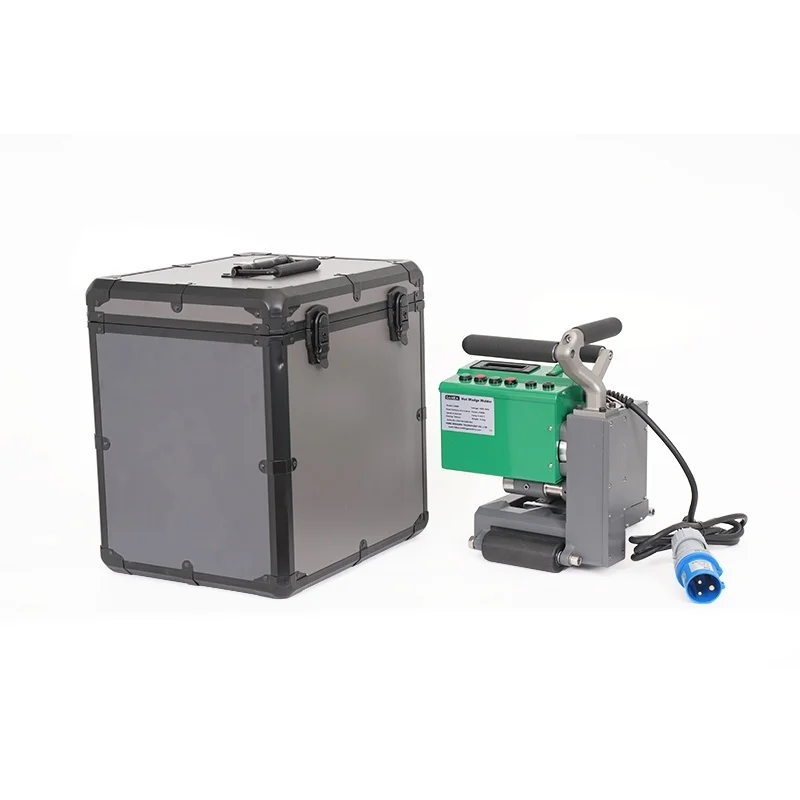
Each machine type is made for a different job, and a fair comparison should start there. The CX600 is built for oil field anti-seepage work. Its thermostatic wedge, adjustable speed and pressure, and dual-track output fit long containment seams in hot-melt geotextiles and geomembranes. General hot wedge machines cover a wider range of materials. They work with all hot-melt materials, so crews can move them between liner types and project sites. Integrated field systems such as the Novaseal GT-200 pair a wedge welder with a dedicated travel system. That design fits compatible nonwoven geotextiles and gives steady, repeatable output on those materials.
The table below puts the options side by side.
Consideration | CX600 | General hot wedge machines | Integrated systems (e.g., Novaseal GT-200) |
|---|---|---|---|
Material fit | Hot-melt geotextiles and geomembranes for containment | All hot-melt materials | Compatible nonwoven geotextiles |
Seam verification | Dual-track, air-testable channel | Depends on model and track configuration | System-dependent |
Field durability | Robust build for rough sites | Varies by model | Built for sustained field use |
Best fit | Oil field anti-seepage welding | Mixed-material shops and varied sites | High-volume nonwoven geotextile work |
No single row says one option wins. A crew that welds several material types may value the broad reach of a general machine. A project with compatible nonwoven geotextiles may gain from an integrated system. The CX600 earns its place where containment seams must pass air testing under harsh conditions.
Compliance and cost
Compliance drives the cost picture. Oil field work demands verifiable seams and written records. The CX600's dual-track output supports air-pressure testing per ASTM D5820, so crews can document seam integrity on site. General machines can also make testable seams when set up for dual-track welding. Integrated systems build verification into their workflow for the materials they support. Each path can satisfy inspectors when operators follow the test method.
Cost follows the same logic. Purchase price, training time, and downtime all count. A general machine may cost less up front and serve more materials. An integrated system may carry a higher price and reward high-volume, single-material work. The CX600 sits between these poles. Its price reflects features aimed at containment work, and those features reduce rework and failed inspections. Buyers should weigh total project cost, not sticker price alone.
The honest answer depends on the job. Mixed-material shops, nonwoven-focused projects, and oil field containment each have a natural fit. The CX600 remains a strong choice for anti-seepage welding where verifiable seams and field durability matter most.
Best practices for CX600 oil field welding
Surface prep and parameter setup
Clean overlap surfaces decide seam quality before the machine ever moves. Crews should wipe away dust, grit, oil, and moisture from both sheets along the weld zone. Oil field sites leave residue on stored rolls, so a quick check of each overlap pays off. Sheets must sit flat and lined up, with the overlap width the project specifies. Wrinkles or trapped debris create channels that air testing will find later.
Parameter setup follows the material, not a fixed recipe. Operators set the wedge temperature to match how the sheet melts, then adjust travel speed and roller pressure to suit thickness and site conditions. A trial weld on scrap material from the same roll confirms the settings before production begins. Crews then check that sample with the air-test method. This step takes minutes and protects the full run.
Maintenance and operator training
Routine care keeps the wedge welder steady over a long project. Operators should clean the heated wedge and rollers after each shift, since melted residue changes heat transfer and drags on the seam. They should inspect the power cord, thermostat response, and drive system for wear. A simple daily checklist catches small faults before they become failed seams.
Training deserves the same attention. Operators need practice with temperature, speed, and pressure adjustments on the actual materials in use. They should also learn the air-test procedure and record-keeping duties, because inspectors review those records. Trained crews produce consistent seams, and consistent seams pass verification. Together, disciplined maintenance and training extend machine life and protect the liner's integrity from the first seam to the last.
The CX600 gives you steady heat control, tough self-moving travel, and dual-track welds with a channel you can air-test. These features suit oil field anti-seepage geotextile welding. There, chemicals, temperature swings, and strict rules demand seams that come out the same every time. The machine handles those challenges without claiming to fit every job. General hot wedge machines work for mixed materials, and integrated systems fit compatible nonwoven geotextiles well.
Picking the right wedge welder starts with the project. Crews should think about material type, seam testing needs, and site conditions before they buy. Tough sites reward careful study, and the CX600 is ready for containment work that must pass inspection.
FAQ
What materials does the CX600 weld?
The CX600 works with hot-melt geotextiles and geomembranes used in oil field containment work. Operators adjust temperature, speed, and roller pressure to match each sheet's thickness and how it melts. General hot wedge machines cover all hot-melt materials, and integrated systems like the Novaseal GT-200 fit compatible nonwoven geotextiles.
How does the CX600 support seam verification?
The machine makes two parallel welds and leaves a narrow channel between them. A technician adds pressure to that channel and watches for pressure loss, following the air-pressure test method in ASTM D5820. A steady reading confirms an unbroken seal along the full seam.
How does the CX600 differ from a general hot wedge machine?
A general machine serves mixed-material shops and varied sites. The CX600 targets oil field anti-seepage work with a thermostatic wedge, adjustable speed and pressure, self-propelled travel, and dual-track output. Each option fits its own job, and buyers should weigh material type, testing needs, and site conditions.
Which settings should operators adjust first?
Operators set the wedge temperature to match how the sheet melts. They then tune travel speed and roller pressure for thickness and site conditions. A trial weld on scrap material from the same roll confirms the settings before production begins.
How often should crews maintain the CX600?
Crews should clean the heated wedge and rollers after each shift, because melted residue changes heat transfer. They should also check the power cord, thermostat response, and drive system every day. Trained operators who practice parameter adjustments and air testing produce consistent, verifiable seams.
See Also
Aquaculture Geomembrane Hot Wedge Welding Using CX300 Welder Techniques
Achieving Strong HDPE Landfill Liner Seams Using Hot Wedge Welder
SWT-PH5000 Sheet Butt Fusion Welding Machine Successfully Passes Factory Acceptance Testing
Why MM-Tech SWT-PH6000 Butt Fusion Welding Machine Is Essential for Semiconductor Tanks
Essential Butt Fusion Welding Machine Steps for Reliable Pipe Joints
CALL US DIRECTLY
NO.355, Youyi South Street, Qiaoxi District, Shijiazhuang, Hebei, China.
www.hdpeweldingmachine.com david@peweldingmachine.com