Butt Fusion Welding Machine Steps for Reliable Pipe Joints

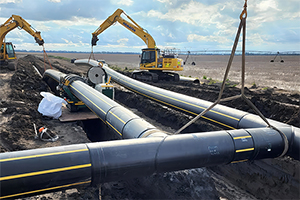
You have an important job when making a strong pipe joint with butt fusion welding. Using a good butt fusion welding machine, like MM-Tech, helps you get good results with plastic welding. Each step is important in this work. Industry rules help you, as shown below:
Standard | Description |
|---|---|
ISO 21307 | You need to know the steps and pressure rules. |
DVS 2207 | You must control settings and check the machine’s work. |
ASTM F2620 | You need skill for both hand and hydraulic fusion jobs. |
If you pay close attention, your butt fusion joint will not leak.
Key Takeaways
Pick a certified butt fusion welding machine like MM-Tech for good results. Certified machines help lower the chance of joint failure.
Always clean and get pipe ends ready before welding. This makes joints strong and stops leaks by taking away dirt and oxidation.
Check how pipes line up and clamp them before heating. Good alignment stops weak welds and helps you save time during fusion.
Choosing the Right Butt Fusion Welding Machine
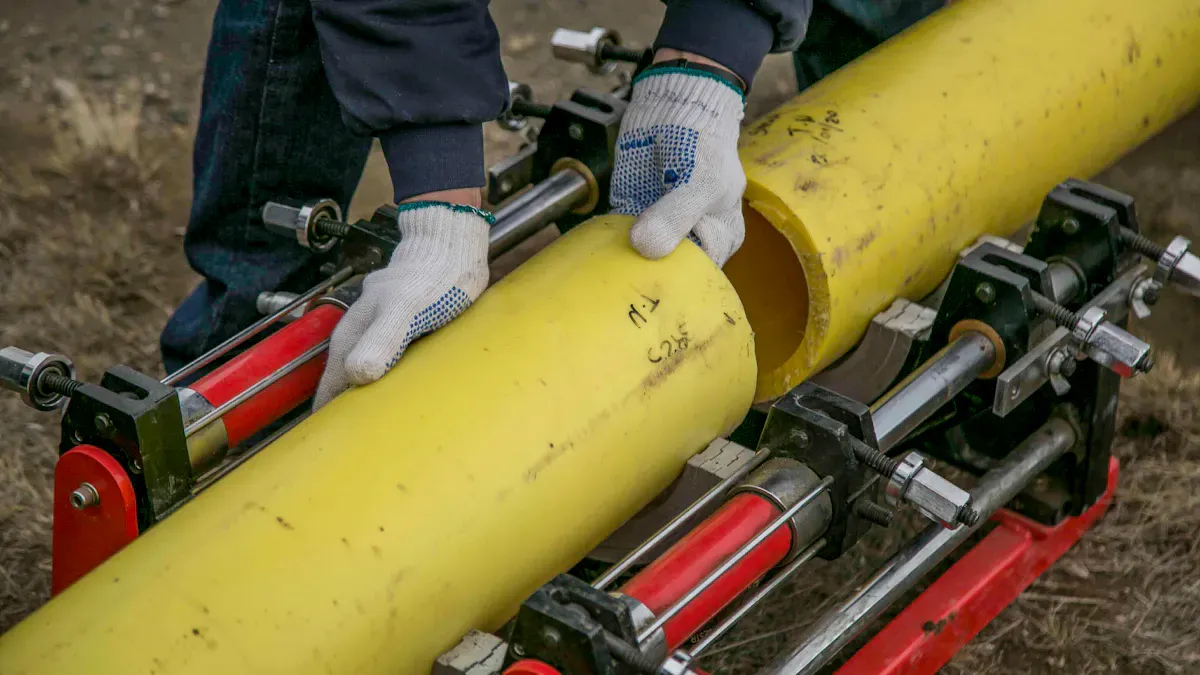
MM-Tech Butt Fusion Machine Features
You need a good butt fusion welding machine for strong pipe joints. Picking a certified machine helps you avoid trouble. Certified machines make joint failure less likely. Most failures happen because people make mistakes or the machine has problems. If you use a trusted brand like MM-Tech, you get better results and fewer issues.
MM-Tech machines are special for many reasons:
Feature | MM-Tech | Other Brands |
|---|---|---|
Hydraulic System | Strong hydraulic systems | Varies by brand |
Digital Controls | Yes | Limited availability |
Automated Pressure Adjustment | Yes | Not always available |
Data Logging | Integrated PEWeldBank system | Often lacks this feature |
Heating Plates | Non-stick for consistent results | Standard heating plates |
Application | Gas and water pipeline projects | General use |
You get a 2-year warranty and help from MM-Tech. The machine has a non-stick heating plate for smooth welds. You can add a data logger to keep track of your work. These features help you follow the rules for hdpe and high-density polyethylene pipe.
Selecting Equipment for Pipe Material and Size
You must pick a machine that fits your pipe and project. Look at these things before you choose:
Check the pipe diameter range. Make sure the machine fits your pipe.
Pick the right operation mode. Manual, semi-automatic, and fully automatic machines work for different jobs.
Review temperature control. Good heating gives you better welds.
Think about safety. Good machines keep you safe from overheating and short circuits.
Ask about after-sales service. A long warranty and good help make you feel sure.
If you follow these steps, you will get strong butt fusion joints every time.
Preparing and Cleaning Pipe Ends
Cutting and Measuring Pipes
You start the butt fusion process by making sure your pipes are the right length and have clean, straight edges. Use a pipe cutter or a saw to cut the pipe ends square. Always check the pipe diameter and wall thickness to match the welding specifications. This step helps you avoid problems later in the fusion process. Inspect the pipe ends for any cracks or scratches. If you see damage, replace the pipe section before moving forward.
Tip: Accurate measuring and cutting help you get a strong, leak-free joint.
Cleaning Surfaces for Fusion
Cleaning the pipe is a key part of the pipe fusion process. You must remove all dirt, grease, and oxidation from the pipe ends. Follow these steps for best results:
Use a soft-bristled brush to remove dust and dirt from at least 100 mm of the pipe ends.
Wipe the pipe ends with a cloth soaked in isopropyl alcohol to remove grease and oil.
Finish by wiping the pipe ends with a dry, lint-free cloth.
All items that touch the welding surface must be clean and dry before you start the fusion process. Surfaces should not have any impurities or chips. If you skip cleaning, you risk weak joints.
Contaminant Type | Effect on Joint Quality | Recommendation |
|---|---|---|
Weakens the joint | Keep surfaces clean and protected | |
Cement | Creates weak points | Use quality control during cleaning |
Clay Dust | Stays in the joint | Clean surfaces before fusion |
By following these steps, you help ensure a reliable joint every time.
Clamping and Aligning Pipes
Secure Clamping with MM-Tech Machine
You need to clamp pipes tightly before welding. The MM-Tech machine uses wide inserts. These inserts touch more of the pipe. This makes the pipe more stable while welding. They stop the pipe from sliding or moving. This keeps the pipe in place. A steady pipe is needed for a strong joint.
If the pipe moves, the weld can get weak. The MM-Tech system holds the pipe firmly. This lowers the chance of weld problems. Good clamping also keeps the pipe safe from uneven pressure.
Ensuring Proper Alignment
Getting the pipes lined up is very important. Put the pipes in the clamps so the ends match up. The clamps hold the pipes still during welding. Check the outer diameter and inner diameter. Look at the wall thickness and any offsets. Careful checking makes sure the pipes fit and line up right.
If pipes are not lined up, the bead can be uneven. Gaps can form between the pipe ends. These problems make the joint weak. You might have to start over. Bad welds can make the pipe break or leak. Making sure pipes are lined up and clamped well helps you get a strong, leak-free joint.
Tip: Always check your pipe alignment and clamping before heating. This step helps you avoid mistakes and saves time.
Facing and Inspecting Pipe Ends
Using the Trimmer Tool
You need to prepare the pipe ends before starting the butt fusion process. Place the pipes into the machine’s clamps. Make sure both sides are even. Adjust the clamps so the pipe ends line up perfectly. Insert the trimmer tool, also called a facer, between the pipe ends. Turn on the trimmer. The blades will shave off a thin layer from each end. This step makes the ends flat and smooth. Watch as the trimmer works. You should see continuous ribbons of plastic coming off. When the ends look even, turn off the trimmer and remove it. Clean away all shavings. Do not touch the faced ends with your hands.
Tip: Always use the trimmer tool to get a flat, perpendicular end face. This helps you avoid weak joints.
Checking for Smooth, Even Surfaces
After trimming, you must check the pipe ends. Look closely at the faces. They should be flat and meet each other with no gaps. Use a light gap meter or a micrometer to check the surface. The error should stay within the allowed range set by industry standards. If you see any incline, gap, or rough spot, repeat the trimming process. A tight fit between the ends is important. Uneven surfaces can cause stress and poor welding pressure. You want both ends to touch fully for a strong joint.
Follow these steps every time:
Trim the ends with the trimmer tool.
Remove shavings and check the faces.
Use a measuring tool to confirm flatness.
Repeat if you find any problems.
Careful facing and inspection help you create reliable plastic pipe joints.
Heating with the Butt Fusion Welding Machine
Setting the Correct Temperature
You need to set the right temperature before you start the heating step. The butt fusion welding machine uses a special heating plate. This plate must reach the correct temperature to melt the pipe ends. If the temperature is too low, the plastic will not melt enough. If the temperature is too high, the pipe can burn or bubble. Both problems can make the joint weak.
Check the table below for the recommended heating plate temperature:
Parameter | Recommended Range |
|---|---|
Heating Plate Temperature | 400°F to 450°F |
For HDPE, the melting temperature sits between 180°C and 230°C. You must use a thermometer or the digital display on your butt fusion welding machine to check the heating plate. Wait until the plate reaches the right temperature before you move to the next step. Do not rush this part of the process. A steady and correct temperature helps you get a strong weld.
Tip: Always check the heating plate at several spots. This makes sure the whole plate is hot enough for the fusion process.
Achieving Uniform Heat Soak
Uniform heat soak means you heat both pipe ends evenly. You want the heat to go deep into the plastic, not just on the surface. The butt fusion welding machine helps you do this by pressing the pipe ends against the heating plate with the right force. You must keep the pressure steady. Do not press too hard or too soft.
Uniform heat soak gives you strong joints. The heat spreads evenly, so the plastic melts the same way on both sides.
Uneven heating can cause problems. You might see weak spots or bubbles in the weld. These defects can make the joint fail.
Follow these steps for a good heat soak:
Place the pipe ends against the heating plate.
Apply steady pressure with the butt fusion welding machine.
Watch for a small bead of melted plastic to form around the pipe edge.
Hold the pipe ends in place for the time set by the fusion process rules.
If you use too little pressure, the pipe ends may not melt together. This can cause cold welding, which is weak. If you use too much pressure, the melted plastic can squeeze out. This can make the joint thin and stressed. Pressure that goes up and down can also cause uneven heating. This lowers the strength of the joint and can make the pipe break later.
Note: Do not touch or move the pipe during heating. Let the butt fusion welding machine do the work. This keeps the heat even and the joint strong.
Heating is a key part of the butt fusion process. When you set the right temperature and get a uniform heat soak, you help make a reliable, leak-free pipe joint.
Joining and Cooling the Joint
Controlled Pressurization
You need to join the pipe ends right after heating. Move the clamps together so the melted ends touch. Use the butt fusion machine to press the ends with steady force. Do not push too fast or too slow. Watch for a small bead of melted plastic to form around the joint. This bead shows that the fusion joint is strong. You must keep the pressure even during this step. If you use too much force, the bead will flatten. If you use too little, the bead will not form. The right pressure helps the HDPE material mix well.
Tip: Always follow the process steps for your machine. This helps you make a safe and strong joint.
Natural Cooling Process
After you press the pipe ends together, you must let the joint cool down. Do not move or touch the pipe during the cooling process. Let the machine hold the pipe steady. The cooling process is very important. If you cool the joint too fast, it can crack or become weak. Never use water or fans to speed up cooling. Let the air do the work. Wait for the time set by the machine or the rules for your project. When the cooling process is done, you can remove the pipe from the clamps. Now you have a strong, leak-free fusion joint.
Step | What to Do | Why It Matters |
|---|---|---|
Pressurize | Apply steady force | Forms a strong joint |
Cool Naturally | Wait for air cooling | Prevents weak spots |
You can trust this method for safe and reliable pipe connections.
Final Inspection and Quality Assurance
Visual Bead Evaluation
When you finish the butt fusion process, check the joint closely. The bead around the pipe ends shows how good the weld is. Look for a bead that is smooth and goes all the way around. The bead should be round and the same size everywhere. Do not want beads that are too thin or flat. These can mean the pipe was not heated right or the pressure was wrong.
Use this checklist to check the bead:
Bead Feature | What to Look For | Why It Matters |
|---|---|---|
Uniform Thickness | Bead thickness is even | Ensures consistent fusion |
Smooth Surface | No cracks, bubbles, or gaps | Prevents weak points |
Complete Circumference | Bead covers entire pipe edge | Guarantees full joint strength |
A good bead means the pipe ends joined well. This makes a strong joint. If you see any problems, you should redo the weld. This helps stop leaks or breaks.
Data Logging and Compliance
You need to use data logging to keep track of the fusion process. Write down the temperature, pressure, and how long each step takes. This helps you make sure the welding follows the rules. It also helps you fix problems if they happen later.
Data logging helps quality assurance by:
Tracking the heating plate temperature during fusion
Watching the pressure on the pipe ends
Recording the time for each step
Keeping good records shows your hdpe pipe joints meet the rules. It proves you did the steps right to make a strong, leak-free joint. Using a machine with data logging helps you keep high standards. It also helps people trust your work.
By checking the bead and keeping good records, you make sure your joint is strong and reliable every time.
When you follow each step with your butt fusion welding machine, you help keep every plastic pipe system strong. MM-Tech gives you good support, easy data logging, and helpful training. If you follow the process and industry rules, your hdpe joints stay safe. This also saves money and keeps your installation working well.
FAQ
How do you know if your butt fusion joint is strong?
You should see a smooth, even bead around the pipe. The bead should not have cracks, gaps, or flat spots.
What pipe materials can you weld with an MM-Tech butt fusion machine?
You can weld PE, PP, PPR, and PVDF pipes. Always check your pipe type before starting.
Why is data logging important in butt fusion welding?
Data logging helps you track temperature, pressure, and time. This proves you followed the correct steps and made a safe joint.
See Also
How Butt Fusion Welders Simplify Pipe Joining Tasks
A Guide To Saddle Fusion Welding Machines And Usage
Best 3 HDPE Fusion Welders To Watch In 2024
CALL US DIRECTLY
NO.355, Youyi South Street, Qiaoxi District, Shijiazhuang, Hebei, China.
www.hdpeweldingmachine.com david@peweldingmachine.com